
Professional Login-Order Online!
Order products online to receive enhanced service and support instantly. Easily share evidence and literature with your

Taking care of your hearing plays a vital role in staying connected, emotionally balanced, and healthy as you age.
Hearing loss often develops gradually, making it easy to overlook as communication becomes more difficult and connections with others begin to weaken. Over time, this can lead to feelings of isolation, frustration, and reduced confidence in social settings. Hearing loss can also affect your sense of safety and awareness, making it harder to stay connected to your environment.
Jump to:
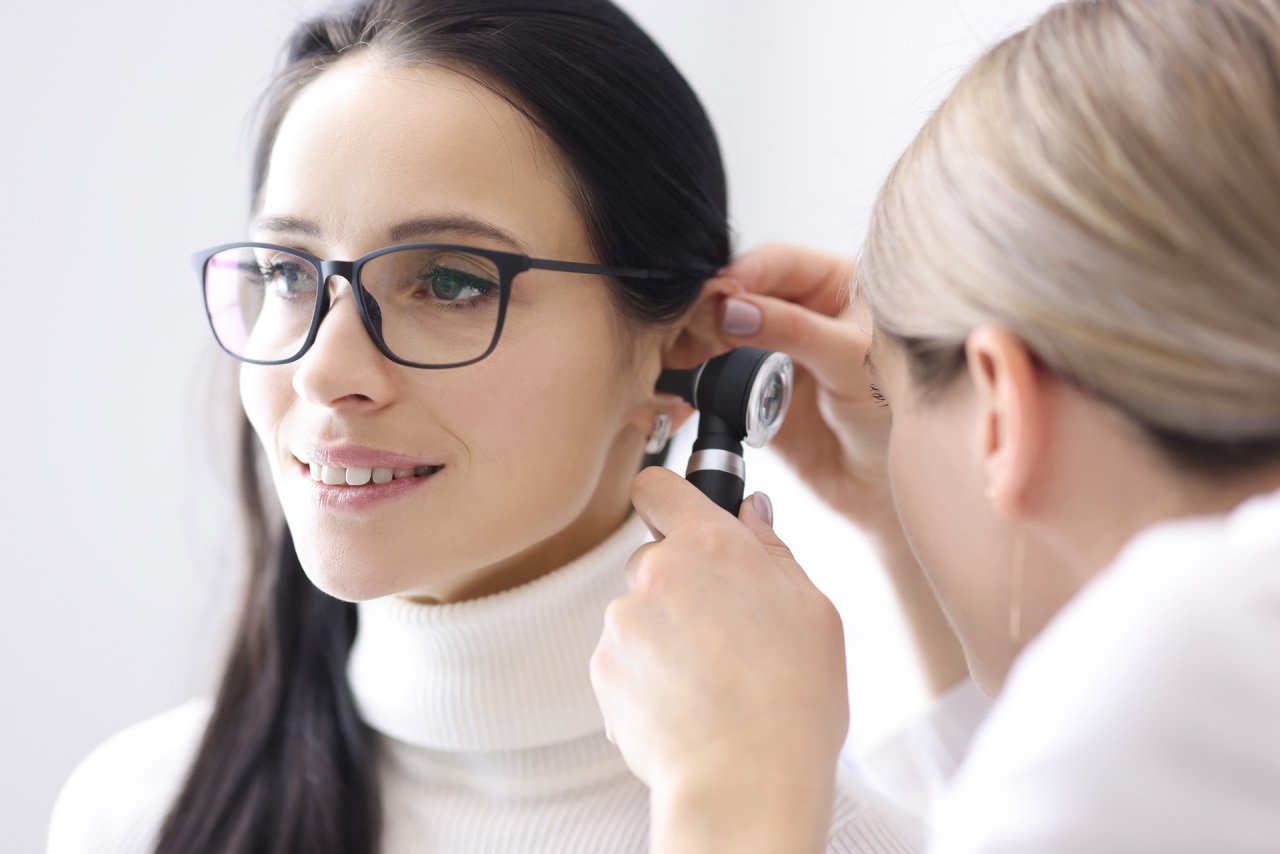
Make hearing health a priority. Recognizing the connection helps protect overall long-term health.
Cognitive health
Hearing loss is one of the most modifiable risk factors for cognitive decline that we can address.1
Cardiovascular Disease (CVD)
Hearing loss prevalence is significantly higher in individuals with CVD risk factors2 such as high blood pressure and diabetes.
Depression
Hearing loss may increase the risk of depression over time.3
Diabetes
Prevalence of hearing loss is nearly 2x higher in individuals with diabetes.4
Hypertension
High blood pressure can increase the risk of hearing loss as individuals age.5
Obstructive Sleep Apnea (OSA)
People with OSA often have reduced hearing ability.6
Smoking
Smoking is linked to poorer hearing and difficulty understanding speech in noisy environments.7


Phonak supports research and innovation in hearing healthcare. We are committed to driving evidence in the field of holistic hearing care and healthy aging.
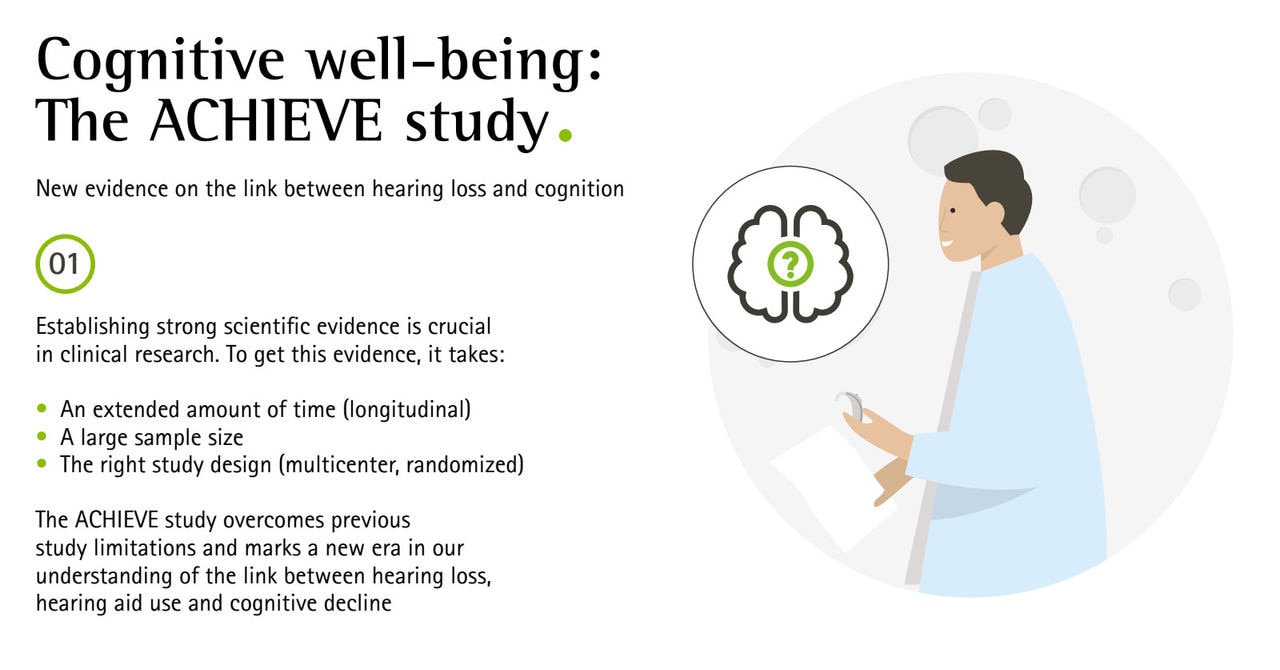
Two recent studies, ACHIEVE (Aging and Cognitive Health Evaluation in Elders) and ENHANCE (Evaluation of Hearing Aids and Cognitive Effects) incorporate longitudinal observations, best practice audiological management, randomized control hearing interventions, and comprehensive cognitive assessments to provide more insight into the relationship between hearing loss and cognition.
Both studies were supported by Sonova’s research program and an in-kind donation of Phonak hearing aids.
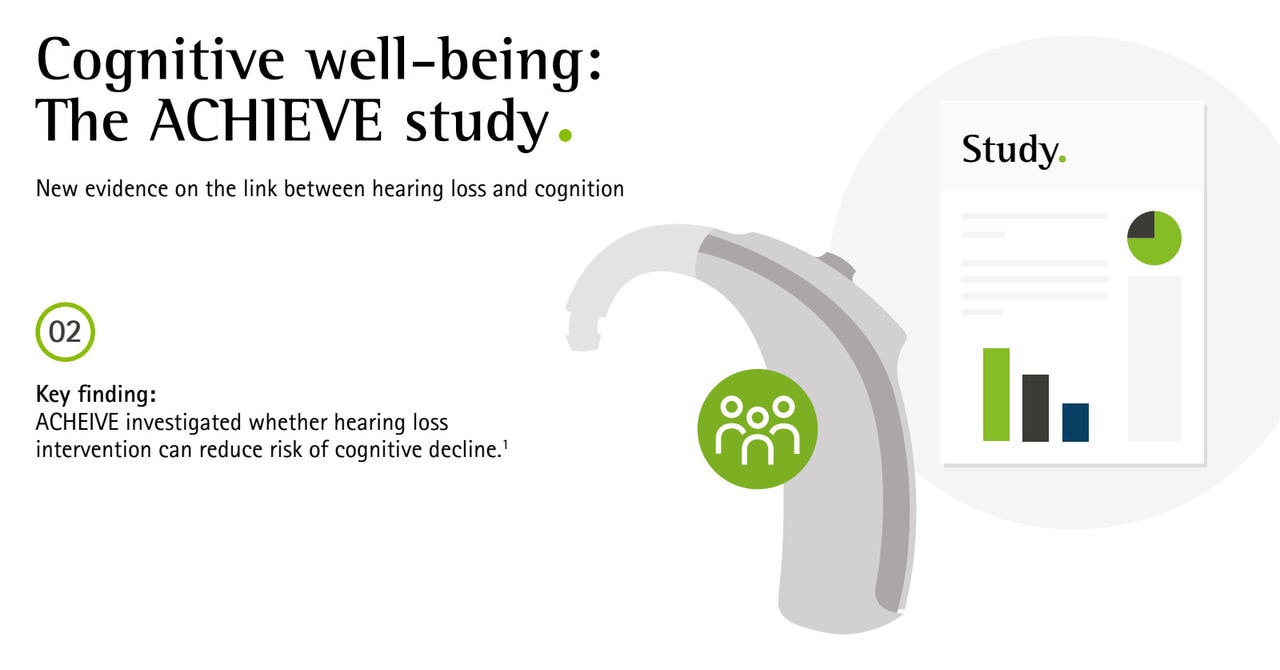
The purpose of the ACHIEVE study is to determine whether best-practices hearing intervention and/or successful aging health education can slow the trajectory or prevent cognitive decline in older adults.
This study is a multi-center randomized control trial. The 977 participants were randomized to receive either hearing intervention or a healthy aging education program.
The ACHIEVE study is led by Co-Principal Investigators Frank Lin, MD, PhD and Josef Coresh, MD, PhD from the Johns Hopkins Bloomberg School of Public Health.
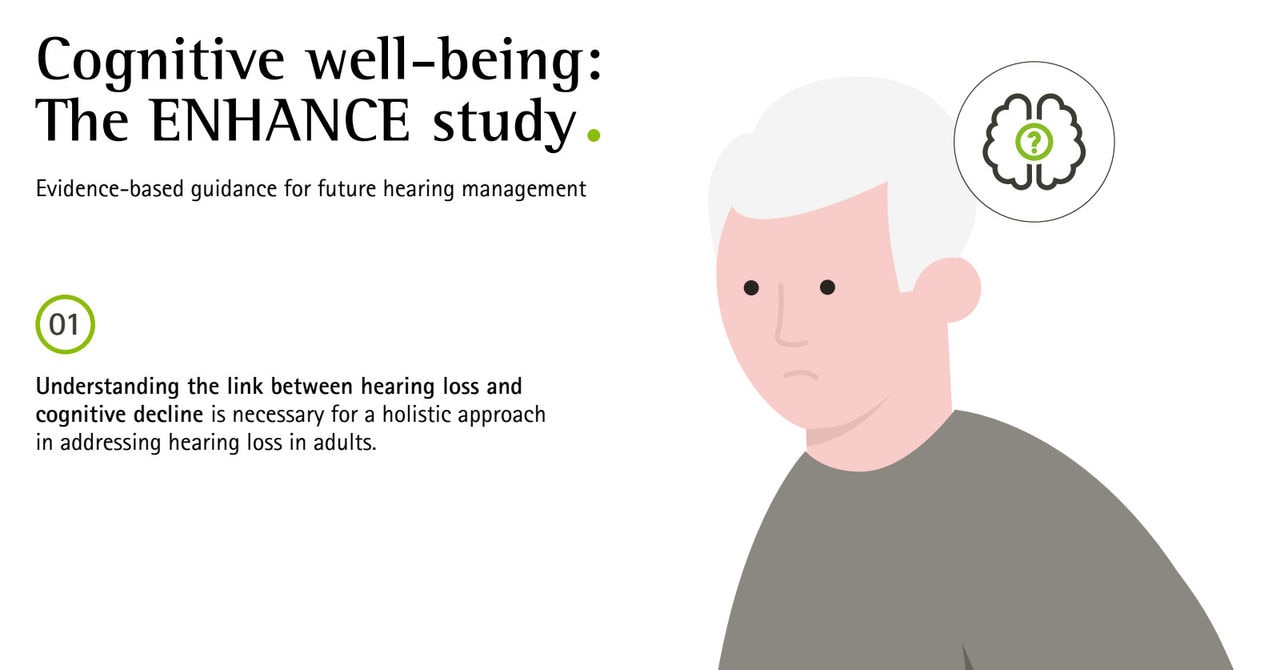
In the ENHANCE study, 160 participants who received hearing intervention, including hearing aid fitting, were followed up for 3 years and their performance on a computerized battery of cognitive tests was compared to 102 participants of the Australian Imaging Biomarker & Lifestyle Study of Ageing (AIBL) who did not receive hearing intervention.
The ENHANCE study is led by Principal Investigator Professor Julia Sarant, PhD from the University of Melbourne.
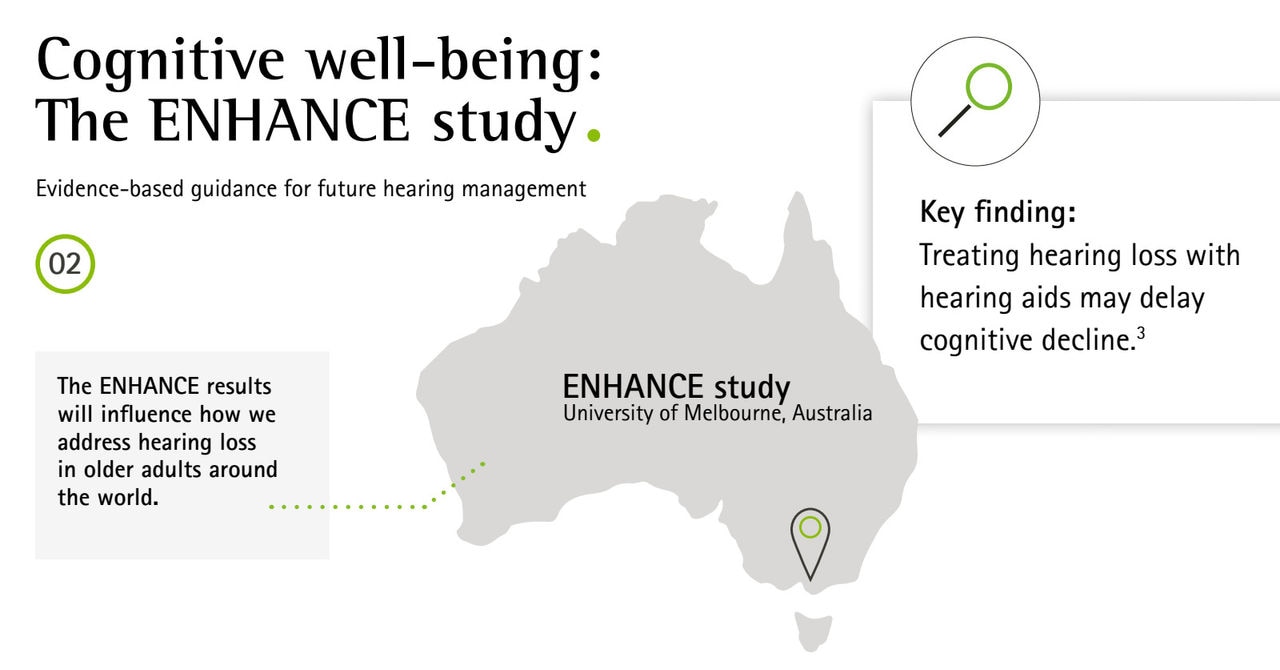
Sarant, J. et al. 2023
Lin, F., et al. (2023, July 17)

Looking for cognition-focused resources for your waiting room? Fill out the form below to receive a kit for your office.
You can also order the Cognition bundle directly from the Phonak Store.
(While supplies last)
*Required information
1. Sanchez, V. A., Arnold, M. L., Garcia, E. E., Reed, N. S., Faucette, S., Burgard, S., Calloway, H. N., Coresh, J., Deal, J. A., Goman, A. M., Gravens‐Mueller, L., Hayden, K. M., Huang, A. R., Mitchell, C. M., Mosley, T. H., Pankow, J. S., Pike, J. R., Schrack, J. A., Sherry, L., & Weycker, J. M. (2024). Effect of hearing intervention
on communicative function: A secondary analysis of the ACHIEVE randomized controlled trial. Journal of the American Geriatrics Society. https://doi.org/10.1111/jgs.19185
2. Baiduc, R. R., Sun, J. W., Berry, C. M., Anderson, M., & Vance, E. A. (2023). Relationship of cardiovascular disease risk and hearing loss in a clinical population. Sci Rep, 13(1), 1642. https://doi.org/10.1038/s41598-023-28599-9
3. Deal, J. A., Reed, N. S., Kravetz, A. D., Weinreich, H., Yeh, C., Lin, F. R., & Altan, A. (2019). Incident Hearing Loss and Comorbidity: A Longitudinal Administrative Claims Study. JAMA Otolaryngol Head Neck Surg, 145(1), 36-43. https://doi.org/10.1001/jamaoto.2018.2876
4. Akinpelu, O. V., Mujica-Mota, M., & Daniel, S. J. (2014). Is type 2 diabetes mellitus associated with alterations in hearing? A systematic review and meta-analysis. Laryngoscope, 124(3), 767-776. https://doi.org/10.1002/lary.24354
5. Reed, N. S., Huddle, M. G., Betz, J., Power, M. C., Pankow, J. S., Gottesman, R., … Deal, J. A. (2019). Association of Midlife Hypertension with Late-Life Hearing Loss. Otolaryngol Head Neck Surg, 161(6), 996-1003. https://doi.org/10.1177/0194599819868145
6. Kasemsuk, N., Chayopasakul, V., Banhiran, W., Prakairungthong, S., Rungmanee, S., Suvarnsit, K., … Keskool, P. (2023). Obstructive Sleep Apnea and Sensorineural Hearing Loss: A Systematic Review and Meta-analysis. Otolaryngol Head Neck Surg, 169(2), 201-209. https://doi.org/10.1177/01945998221120777
7. Garcia Morales, E. E., Ting, J., Gross, A. L., Betz, J. F., Jiang, K., Du, S., … Deal, J. A. (2022). Association of Cigarette Smoking Patterns Over 30 Years With Audiometric Hearing Impairment and Speech-in-Noise Perception: The Atherosclerosis Risk in Communities Study. JAMA Otolaryngol Head Neck Surg, 148(3), 243-251. https://doi.org/10.1001/jamaoto.2021.3982