Professional Login-Order Online!
Order products online to receive enhanced service and support instantly. Easily share evidence and literature with your
Choose another country or region to see content specific to your location.


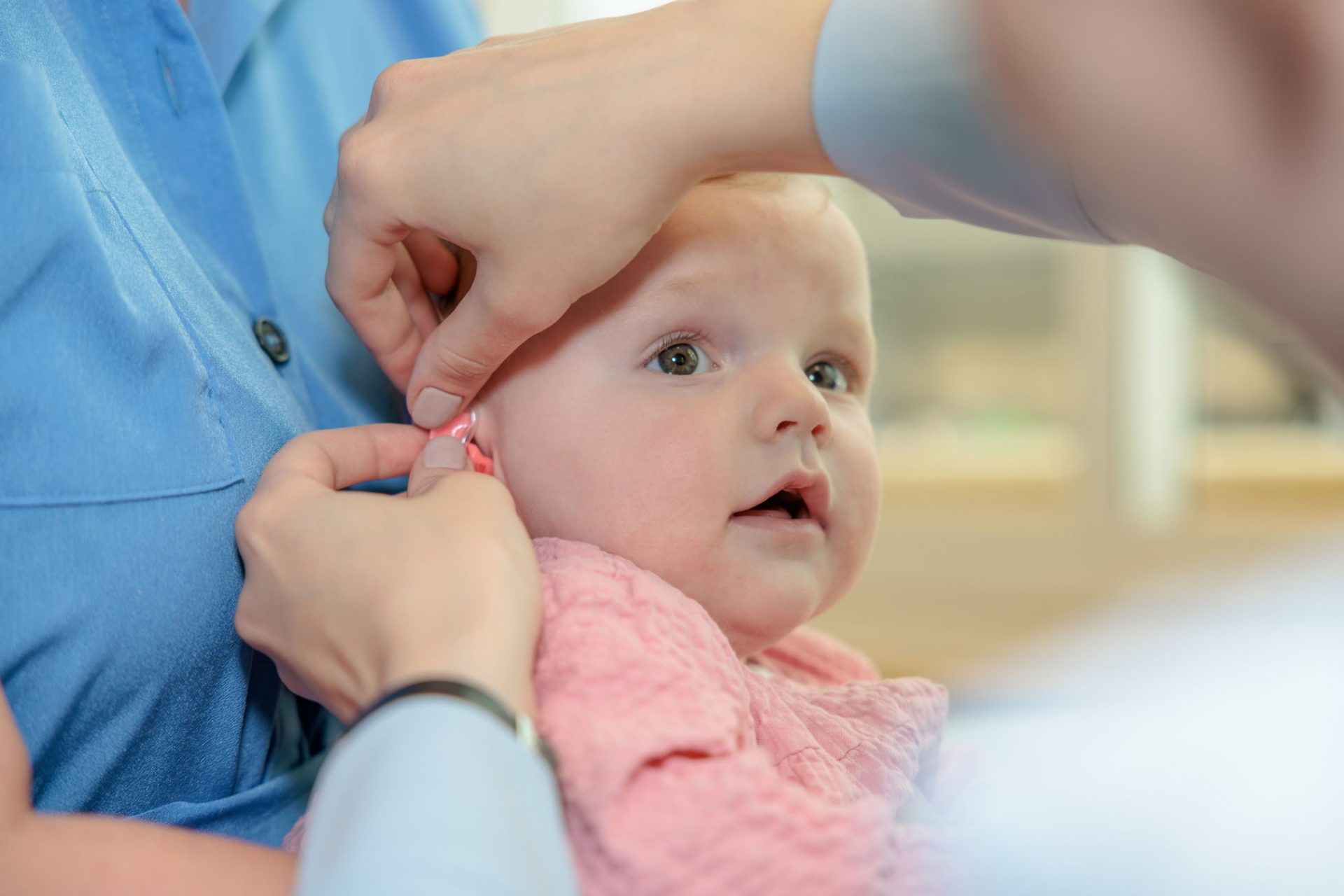
As universal newborn hearing screening (UNHS) becomes more common, paediatric audiologists are tasked with fitting hearing aids on infants at a very young age and on an ambitious timeline. While selecting, coupling, and maintaining hearing aids on infants and children require solutions that are different, teens also require special consideration because they are undergoing a significant mental growth spurt and face unique questions and decisions in their hearing journey. Phonak has assembled resources and tools to help audiologists provide the best possible care to their young patients.
Explore the latest clinical best practices and cutting-edge hearing technologies designed to help children excel both in the classroom and at home.

This article on the Phonak Audiology Blog explains why children need stronger signal-to-noise (SNR) support than adults, and why that need is greatest for children with hearing loss. Learn about a new consensus publication that helps guide evidence-based noise management decisions beyond the classroom.

New insights from Big Data reveal how theory and practice align to help children wear their hearing aids longer and achieve better outcomes.

The Vanderbilt Classroom Listening Assessment Short Survey is a picture-based questionnaire that specifically targets perceived listening abilities in school-based situations to help clinicians understand and support listening challenges in noisy school environments.
Authored by experts from the Phonak Pediatric Advisory Board, the Pediatric Focus Series shares best-practice considerations for pediatric care

Considering directional microphone use in pediatric hearing aid fittings

Finding the right fit: Pediatric hearing aid coupling options for children

Hearing aid prescription and fine-tuning: The basics of preferred practices

Noise reduction in children’s hearing aids: Evidence-based solutions.
Clinical protocols serve as best-practice guidelines for accurate assessment, diagnosis, and intervention in pediatric audiology. These latest protocols, highlighted by experts at the 2024 A Sound Foundation Through Early Amplification conference, are compiled here for quick reference.
Covering key areas such as Auditory Brainstem Response (ABR), Auditory Steady-State Response (ASSR), and amplification, these resources support consistent, high-quality hearing care for infants and young children.
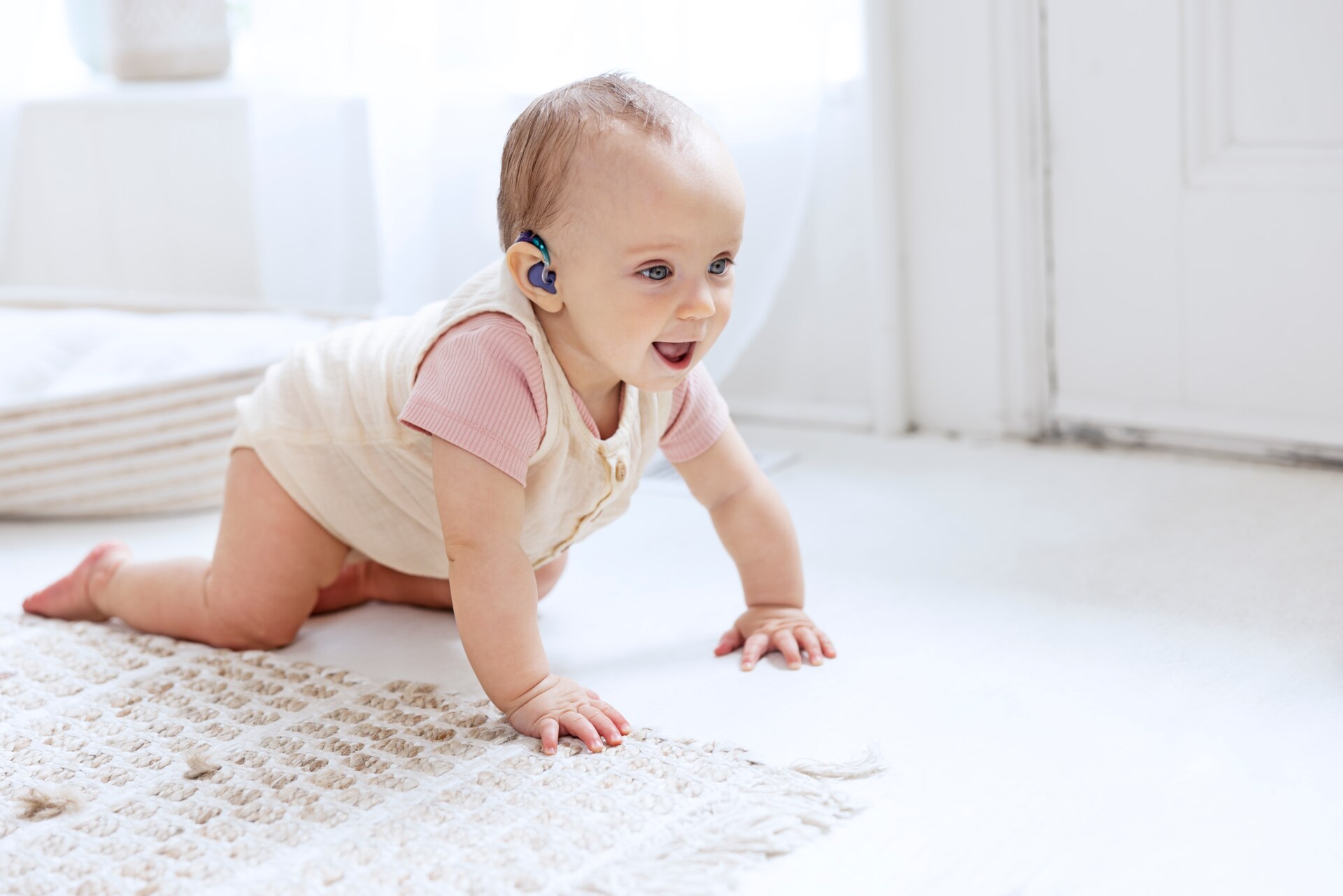
Guidelines for amplification in infants and preschool-aged children with permanent hearing loss, including unilateral hearing loss

Best-practice guidelines for pediatric hearing aid fitting, verification, and outcomes assessment

Protocols for newborn hearing screening and early intervention in New Zealand

Best practices for air- and bone-conducted ABR testing to ensure accurate diagnosis and timely intervention

Standardized guidelines for ABR testing in infants to support accurate diagnosis and intervention

Guidance on ASSR testing to determine hearing thresholds in infants and young children


Ryan McCreery and colleagues explore evidence-based hearing aid fitting criteria for children with mild bilateral hearing loss. It provides guidance for clinicians to ensure appropriate amplification and intervention.
The Childhood Hearing Loss Question Prompt List (QPL) is a communication aid created to encourage families to actively participate in discussions by inviting them to choose questions and topics they would like to discuss during an appointment.
It provides families the opportunity to ask about diagnosis and facilitates the process of decision making and making informed choices.

Vanderbilt Classroom Listening Assessment Short Survey (VCLASS)
The VCLASS is designed to evaluate and track listening challenges in typical school-based situations, with both unaided and aided assessment options:
Upon completion of the online version, the survey automatically calculates scores, and clinicians can download a PDF of the completed form for review and documentation.
The interactive assessment tools can be completed on your computer by entering the required data in each field and the tools will then auto-calculate the results based on your entries. They can also be shared electronically with teachers or parents to fill out and return via e-mail.
The Ling-6 test is a quick and easy test that can be used to check a child’s access to the minimal amount of sounds required to hear, understand, and learn speech. The Ling-6 covers six speech sounds that range from low to high frequency. It can be used by professionals as well as parents.
There are different assessments that allow paediatric audiologists and hearing resource teachers to evaluate a child’s individual hearing and listening abilities, difficulties, behaviors, and use of assistive technology.

To advance the treatment approach for Unilateral Hearing Loss (UHL), Phonak brought together an international panel of experts to discuss best practices and made the following recommendations for children with UHL:
Explore Phonak’s extensive library comprised of publications and evidence related to Pediatric Audiology, including scientific research relevant to the field. Find more on the Phonak Evidence page.
Explore Phonak's extensive library comprised of publications and evidence related to Paediatric Audiology including scientific research relevant to the field.